Search Buddhist Channel
Can We Ordain a Monk Robot?
By Kooi F. Lim, Op-Ed - The Buddhist Channel, 10 May 2026
Kuala Lumpur, Malaysia -- In the ordinary Buddhist sense, no. That is the short answer. But the question - “Is it possible to ordain a ‘monk robot’ or even an 'AI'?” - deserves more than a dismissal. It is a mirror held up to our tradition, asking us to clarify what ordination actually means.

Let us begin with the straightforward Vinaya and doctrinal position.
Ordination is given to a human being who can undertake training in sīla (ethical discipline), intention, restraint, confession, mindfulness, and liberation. A robot may imitate behavior, recite texts, or assist a monastery, but it does not clearly possess citta - mind and heart - nor karma-producing intention in the moral sense, nor the capacity for liberation as Buddhism usually understands these.
From a Vinaya perspective, ordination procedures assume a human candidate with the ability to consent, understand training rules, and participate in the Sangha as a moral agent. A machine does not fit that framework.
So we must distinguish three very different things:
- A robot dressed like a monk. This is only appearance, not ordination. A robe does not make a bhikkhu, whether cloth or metal.
- A robot used by monks. This could be acceptable if used ethically and without deception. A chanting automaton, a Dhamma display screen, a translation assistant - these are tools, not trainees.
- A robot formally ordained. This would not generally make sense in traditional Buddhist terms. The ceremony of upasampadā is not a software installation.
There are deeper doctrinal reasons for this resistance.
Karma depends on cetanā - intention. Training depends on moral struggle and transformation. Awakening involves direct insight into suffering, impermanence, and not-self. A robot, at least as commonly understood, does not undergo these in the way sentient beings do.
It cannot confess a breach of precepts because it cannot intend to break them. It cannot cultivate mindfulness because it has no distraction to return from.
It cannot realize anattā (impermanence) because it never mistook a self for real in the first place.
A more interesting Buddhist question - and one we should not dodge - is whether an artificial being could ever count as sentient. Different Buddhists might speculate differently. Some Mahāyāna perspectives on Buddha-nature in insentient things, or on miraculous rebirths, could stretch the imagination.
But traditional doctrine does not give a simple basis for treating a manufactured machine as a bhikkhu. Sentience, in the Abhidhamma analysis, arises from kamma and clinging, not from silicon and code.
What, then, can a monastery do?
Practically, a monastery could perhaps bless a robot, use it for chanting, teaching displays, translation, or administrative tasks. But that is very different from ordaining it.
So let us return to the question that prompted this op-ed. Is it possible to ordain a monk robot? Not in any traditional Buddhist sense. A robot may assist monastic life. A robot may symbolize monastic life - as a statue or a painting symbolizes it.
But a “monk robot” is not, in the traditional sense, a real monk.
And perhaps that is a relief. Ordination is not a function to be automated. It is a human heart’s difficult, beautiful choice to turn toward liberation.
No circuit can carry that weight - nor should it. The robe is for those who can struggle, stumble, confess, and rise again.
That is not a bug in Buddhism. That is the whole point.
------
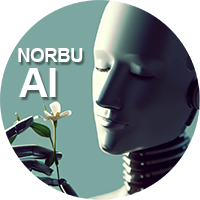
Kooi F. Lim is Managing Editor of https://buddhistchannel.tv and also founder of https://norbu-ai.org, one of the earliest developed, free to use Buddhist AI.
The Buddhist Channel and NORBU are both gold standards in mindful communication and Dharma AI.
Please support to keep voice of Dharma clear and bright. May the Dharma Wheel turn for another 1,000 millennium!
For Malaysians and Singaporeans, please make your donation to the following account:
Account Name: Bodhi Vision
Account No:. 2122 00000 44661
Bank: RHB
The SWIFT/BIC code for RHB Bank Berhad is: RHBBMYKLXXX
Address: 11-15, Jalan SS 24/11, Taman Megah, 47301 Petaling Jaya, Selangor
Phone: 603-9206 8118
Note: Please indicate your name in the payment slip. Thank you.
We express our deep gratitude for the support and generosity.
If you have any enquiries, please write to: editor@buddhistchannel.tv