
Search Buddhist Channel
Faith, Evidence, and Heritage: A New Chapter in the Study of Sacred Relics
Dharma News Desk, The Buddhist Channel, 27 Aug 2026
A report on three major institutional research monographs published by the Hswagata Buddha Tooth Relics Preservation Private Museum (August 2026)
Introduction
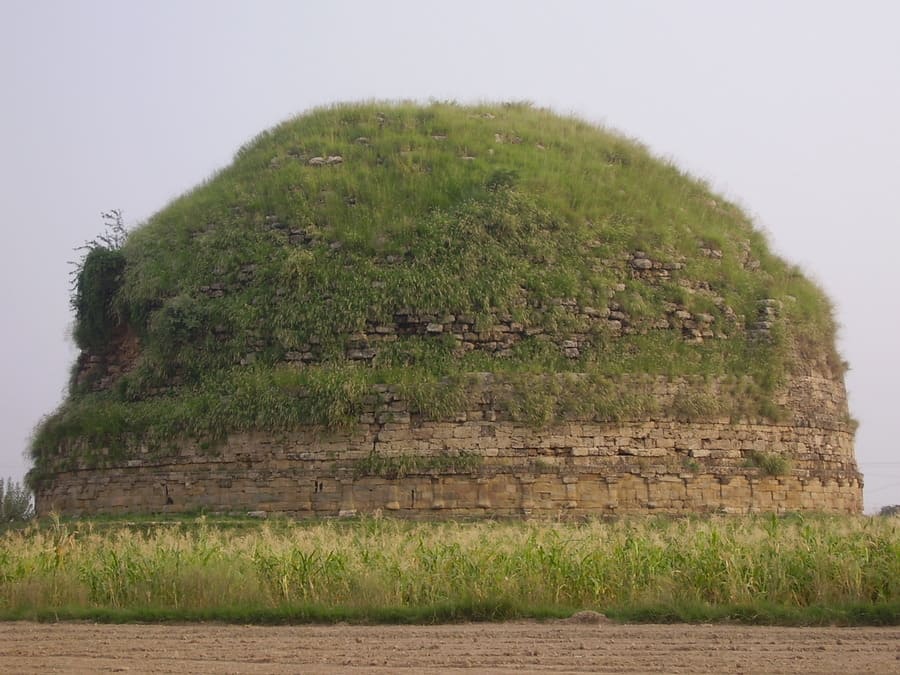
In a landmark contribution to Buddhist heritage scholarship, the Hswagata Buddha Tooth Relics Preservation Private Museum has published three comprehensive research monographs examining tradition-associated tooth relics from major Gandharan stupa sites: Manikyala (the Great Tope) in Pakistan, and Kamari Stupa 1 and 2 in Afghanistan. These publications, released in August 2026 under the Hswagata International Relic Registry (HIRR), represent a significant step forward in the careful, evidence-based study of sacred Buddhist heritage.
The three monographs—HIRR-2026-0030 (Manikyala Stupa), HIRR-2026-0031 (Kamari Stupa Broken Front Tooth), and HIRR-2026-0032 (Additional Kamari Tooth-Like Specimen)—share a common methodological framework: the Integrated Relic Custodianship Model (IRCM). This approach integrates archaeological evidence, historical documentation, museum records, and devotional traditions while maintaining clear distinctions between them.
----
Manikyala Stupa (The Great Tope): A Model of Documentary Rigor
HIRR-2026-0030 examines one of the most important nineteenth-century archaeological discoveries for the study of Gandharan Buddhism. Excavated by General Jean-Baptiste Ventura in 1830 and documented by James Prinsep, the Manikyala Great Stupa yielded a remarkable sequence of relic deposits.
What the Research Establishes
The study confirms with strong documentary evidence that:
1. Ventura's 1830 excavation penetrated a monumental Buddhist stupa in the Pothohar region of what is now Pakistan
2. The monument contained multiple deposit events at different depths—an upper deposit, a middle deposit, and a deep foundation deposit
3. The foundation deposit contained nested copper-alloy and gold reliquaries with coins of Kushan rulers Kanishka I and Huvishka, providing a strong chronological anchor
4. Kharoṣṭhī inscriptions on reliquaries document patronage connections with the governor of Kapisa and a manufacturer named Gomana
5. Modern British Museum records preserve detailed object-level documentation, including traces of silk, wax, and the historically famous "brown liquid" analyzed by Prinsep
The Brown Liquid: A Cautionary Tale
One of the most fascinating elements of the Manikyala case is the "brown liquid" found in the innermost gold reliquary. Prinsep's 1834 chemical analysis detected phosphate of lime, ammonia, and other constituents interpreted as indicating animal remains. The monograph carefully distinguishes this historical chemical observation from modern biological identification, noting that nineteenth-century analytical methods lacked modern contamination controls and could not establish species, anatomical element, or individual identity.
The Myanmar Specimen Connection
The research was prompted by a 2026 institutional case file proposing an archival correlation between Manikyala and a tradition-associated tooth relic currently safeguarded in Myanmar. The monograph concludes that:
- Manikyala is strongly documented as a multi-phase Buddhist relic monument
- A broader tradition of bodily relic deposition is historically plausible
- The specific proposition that the Myanmar specimen was excavated by Ventura at Manikyala remains a correlation hypothesis requiring an object-level provenance bridge
----
Kamari Stupa: Two Studies in Provisional Association
The Kamari research programme comprises two related monographs examining different tooth-like specimens associated with the same Afghan archaeological context.
HIRR-2026-0031: The Broken Front Tooth Claim
Kamari 2 was excavated in 1833 by Johann Martin Honigberger, documented by Eugène Jacquet, and later reconstructed by modern scholarship including the work of Elizabeth Errington. The core deposit contained a gold coin of Wima Kadphises, situating the foundation in the early second century CE.
Key findings:
1. The archaeological deposit is well-documented: a central cut-stone cell contained a dark-red cloth, bronze basin, pulverized earth/probable ash, bark, white resinous material, gemstones, a cylindrical silver reliquary, a rough concretion, and the Wima Kadphises gold coin
2. The broken front tooth identification is not verified in the inspected excavation evidence. Errington's Figure 59 enumerates items 59.1–59.7; no tooth is listed in the textual reconstruction
3. A "Fig. 59.8" locator claimed in prior institutional publications could not be verified—the plate contains an additional unnumbered object that has been institutionally identified as a broken front tooth, but its original numbering and caption basis require further verification
4. Excavator identity has been corrected: the primary record assigns the excavation to Honigberger (1833), not Sir John Marshall (1913) as earlier candidate data suggested
HIRR-2026-0032: The Additional Tooth-Like Specimen
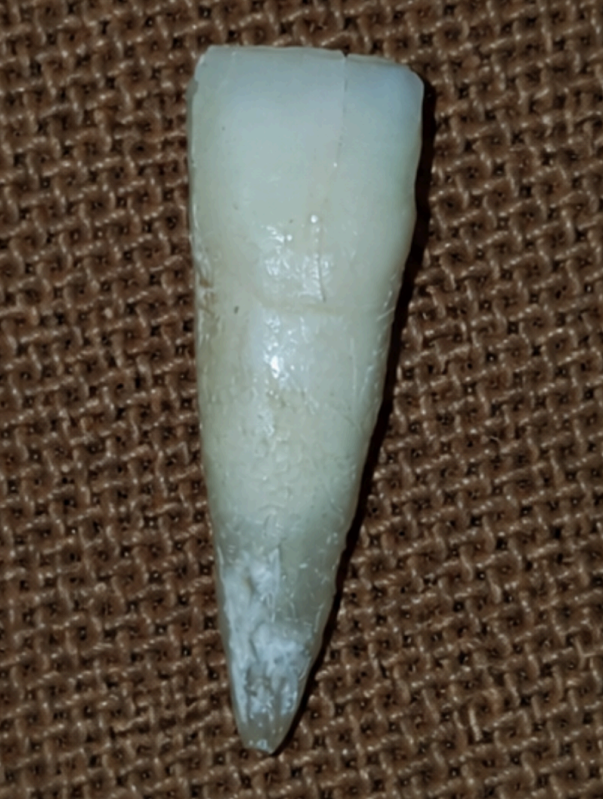
This study investigates a second elongated tooth-like specimen, physically distinct from the broken crown fragment studied in HIRR-2026-0031. Three project-supplied photographs show a separate object with a broad crown-like upper body and a long tapering root-like portion .
Key findings:
1. The specimen's physical existence is supported by multiple project-supplied photographs
2. Its dental character remains possible but unverified—photographs alone cannot establish human origin, exact tooth position, or species
3. The modern specimen is reported to have been safeguarded by Yan Aung Myin Dhat Taw Taik (ရန်အောင်မြင်ဓာတ်တော်တိုက်) in Myanmar through at least 2023
4. A significant provenance gap exists between the 1833 Honigberger corpus and the modern custodial group
5. The Kamari connection is treated as a provisional hypothesis requiring object-level corroboration
----
Methodological Excellence: The IRCM Framework
Across all three monographs, several methodological principles deserve special attention:
1. Separation of Evidence Categories
The IRCM framework insists on distinguishing:
- Evidence: Directly documented material
- Interpretation: Scholarly explanation supported by evidence
- Hypothesis: A possibility not yet proven
- Doctrine: Religious or commentarial position
This disciplined approach prevents devotional attribution from answering archaeological questions or photographic evidence from answering biological ones.
2. Claim-by-Claim Assessment
Each proposition is tested independently. For example, a modern specimen might be:
- Supported as a physically existing object ✅
- Possible as a tooth-like form ✅
- Unverified as human dental tissue ❌
- Unverified as ancient ❌
- Unverified as connected to a specific excavation ❌
This prevents one strong fact (e.g., the archaeological importance of a stupa) from carrying unrelated claims (e.g., that a modern specimen came from it).
3. Transparency About Gaps
The monographs explicitly document:
- Missing custody chains
- Unverified biological identification
- Unresolved figure numbering
- Negative search results
These gaps are presented as research findings rather than as failures.
4. Respect for Devotional Traditions
The institutional framework recognizes that Buddhist communities may understand relics through faith, devotion, doctrine, and ritual memory . Such traditions are recorded respectfully as religious heritage without being converted into archaeological or scientific claims. This dual-preservation approach honors both material and intangible heritage.
Implications for Buddhist Heritage Studies
These publications offer valuable lessons for the broader study of Buddhist relics and heritage:
The Value of Object-Level Documentation
The Manikyala case demonstrates the importance of museum registration and object-level records. British Museum numbers such as 1848,0602.1.a-b, .2.a-b, .3, .5, and .6 allow researchers to track individual reliquaries, coins, and associated objects across time . Without such identifiers, archaeological assemblages can become undifferentiated masses of "relics."
The Problem of Composite Narratives
Nineteenth-century antiquarian practices—central shafts, incomplete recording, commercial motivations—created documentation challenges that persist today. The Kamari studies show how later summaries can compress the work of Honigberger, Masson, Jacquet, and others into misleading single narratives. Careful source criticism is essential.
The Ethics of Sacred Heritage
The IRCM framework demonstrates how archaeological research and devotional respect can coexist. The institution explicitly states that:
"While archaeological research seeks to understand relics through material evidence and historical documentation, Buddhist traditions understand relics through an entirely different framework grounded in faith (Saddhā), merit (Puñña), devotion (Pūjā), and spiritual realization."
This recognition—that scientific caution and religious reverence can coexist—represents a mature approach to sacred heritage.
The Need for Non-Destructive Methods
All three monographs emphasize non-destructive study. The recommended examination sequence begins with calibrated photography, measurements, dental specialist review, and non-invasive imaging (such as micro-CT) before any invasive method is considered. This priority protects both the physical integrity and devotional significance of sacred objects.
Current Status and Future Directions
Priority Research Areas
The monographs identify several priorities for future work:
1. Archival research: Honigberger family papers, British Museum correspondence, dealer and auction records
2. Object documentation: Controlled photography, measurements, and condition reporting for modern specimens
3. Specialist examination: Non-invasive dental and material assessment
4. Provenance bridging: Documented connections between nineteenth-century excavations and modern custodial groups
5. Scientific verification: Non-invasive imaging, and only then, with appropriate ethical and custodial authorization, minimally destructive methods
Conclusion
The three HIRR monographs represent a significant contribution to Buddhist heritage scholarship. They demonstrate:
1. Archaeological rigor in reconstructing nineteenth-century excavations through multiple source families
2. Methodological discipline in distinguishing evidence from interpretation, hypothesis, and doctrine
3. Intellectual honesty in documenting provenance gaps and unresolved questions
4. Respect for devotional traditions while maintaining scientific standards
5. Transparency about institutional self-correction when earlier claims require revision
For the broader Buddhist community, these publications offer a model of how sacred heritage can be studied with both reverence and critical inquiry. They show that faith and evidence need not be in conflict—both can be honored when each is allowed to speak in its own voice.
About the Research
The monographs are published by the Office of Siridantamahāpalaka, The Hswagata Buddha Tooth Relics Preservation Private Museum, under the Hswagata International Relic Registry (HIRR) and Integrated Relic Custodianship Model (IRCM). The research was conducted by Venerable Dhammasami (Sao Dhammasami, Bhikkhu Indasoma Siridantamahāpalaka), with institutional review by Venerable Indaka.
DOI references:
- Manikyala Stupa: 10.5281/zenodo.22009481
- Kamari Broken Front Tooth: 10.5281/zenodo.22021594
- Additional Kamari Specimen: 10.5281/zenodo.22025453
Note: This report is prepared for publication on Buddhist web portals to share these significant research findings with the wider Buddhist community while maintaining the scholarly integrity of the original monographs.
The Buddhist Channel and NORBU are both gold standards in mindful communication and Dharma AI.
Please support to keep voice of Dharma clear and bright. May the Dharma Wheel turn for another 1,000 millennium!
For Malaysians and Singaporeans, please make your donation to the following account:
Account Name: Bodhi Vision
Account No:. 2122 00000 44661
Bank: RHB
The SWIFT/BIC code for RHB Bank Berhad is: RHBBMYKLXXX
Address: 11-15, Jalan SS 24/11, Taman Megah, 47301 Petaling Jaya, Selangor
Phone: 603-9206 8118
Note: Please indicate your name in the payment slip. Thank you.
We express our deep gratitude for the support and generosity.
If you have any enquiries, please write to: editor@buddhistchannel.tv