
Search Buddhist Channel
Myanmar's Buddhist Circuit Poised for Global Recognition
by Jaffee Yee, The Buddhist Channel, 8 July 2026
Yangon, Myanmar -- As Southeast Asian nations invest in their Buddhist heritage to attract pilgrims and spiritual seekers, one country stands at a crossroads of immense potential: the Republic of the Union of Myanmar. Home to some of the world's most venerated Buddhist sites, the country is increasingly seen as a sleeping giant in the realm of religious tourism, with experts and officials alike recognizing its capacity to develop a comprehensive Buddhist circuit that could rival the well-trodden paths of India, Nepal, Thailand and Sri Lanka.
A Land of Gold and Pagodas
Myanmar's Buddhist heritage is extraordinary in both scale and importance. The ancient temple plains of Bagan, a UNESCO World Heritage Site since 2019, contain over 2,200 temples and pagodas constructed between the 9th and 12th centuries. This sprawling archaeological marvel, with its rose-coloured stupas rising majestically above the Ayeyarwady River, represents one of the densest concentrations of Buddhist architecture anywhere in the world.

Beyond Bagan, the country is home to its "Five Great Sacred Shrines", the holiest Buddhist sites in Myanmar: the Shwedagon Pagoda in Yangon, Shwemawdaw Pagoda in Bago, the Golden Rock (Kyaiktiyo) in Mon State, Shwezigon Pagoda in Bagan, and the Mahamuni Buddha Temple in Mandalay. Each site holds deep significance in Theravada Buddhist tradition, with legends connecting them to relics of the Buddha himself.
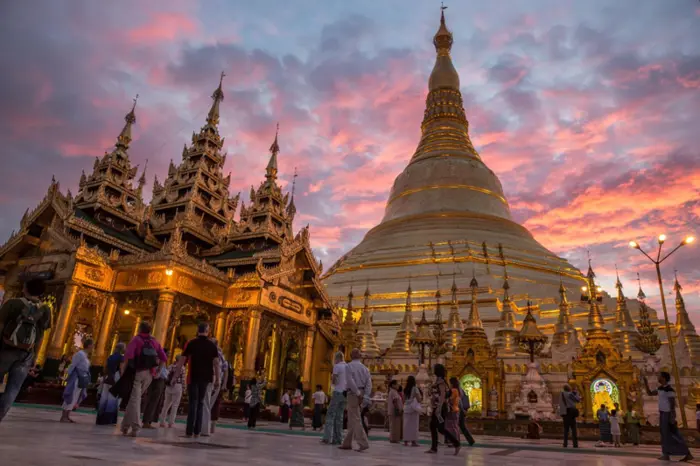
The Shwedagon Pagoda, believed to be over 2,500 years old, is said to enshrine eight strands of the Buddha's hair and is entirely plated in solid gold. At the Mahamuni Temple in Mandalay, thousands gather daily for the dawn face-washing ceremony of its revered "breathing" Buddha statue, a practice that has continued uninterrupted for generations.
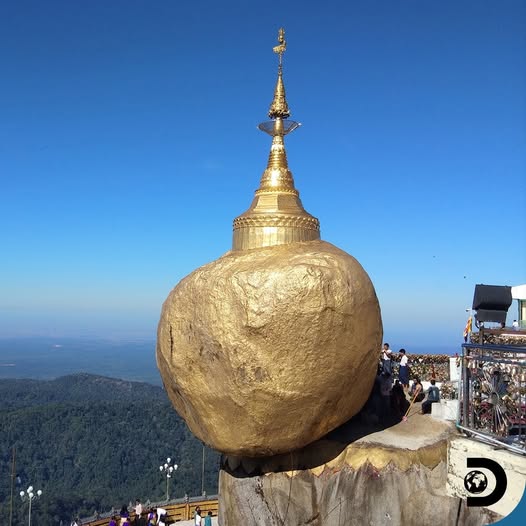
Meanwhile, at Kyaiktiyo, a massive golden boulder perched precariously on a cliff edge is believed to be held in place by a single strand of the Buddha's hair, drawing pilgrims who marvel at this testament to faith.
Pilgrimage Statistics Reveal Enduring Devotion
Despite challenges the country has faced in recent years, pilgrimage to these sacred sites continues with resilience. During the 2025–2026 Buddha Pujaniya Festival at Kyaiktiyo Pagoda alone, over 1.43 million visitors paid homage to the site, including more than 4,200 international travellers from Thailand, China, and elsewhere. In 2024, Shwemawdaw Pagoda in Bago welcomed nearly 400,000 domestic pilgrims alongside over 4,700 international visitors.
Tourism officials report that "Yangon, Mandalay, Bagan, Inle Lake, and the Golden Rock Pagoda remain the biggest draws" for visitors to the country. The Myanmar government has set an ambitious target of 1.8 million foreign visitor arrivals this year, with officials stating they "mainly expect to see a surge in Chinese and Thai visitors" as key drivers of growth. These numbers, while significant, only hint at the country's untapped potential.
Building a Regional Buddhist Network
Regional cooperation is underway to position Myanmar within a broader Southeast Asian Buddhist pilgrimage network. Cambodia and Myanmar have strengthened their collaboration on religious tourism, agreeing to develop joint tourism products under a "two countries, one destination" strategy.
This partnership focuses on creating cross-border Buddhist pilgrimage routes, integrated spiritual travel packages, and joint marketing campaigns targeting international pilgrims. Aligned with broader ASEAN and Greater Mekong Subregion frameworks, this collaboration reflects a regional recognition that shared Buddhist heritage can serve as a powerful driver of meaningful spiritual tourism.
During a recent state visit to Laos, Myanmar's President Min Aung Hlaing and Lao leaders signed a Memorandum of Understanding (MoU) on tourism cooperation. The agreement, linking Laos' Ministry of Culture and Tourism with Myanmar's Ministry of Hotels, Tourism and Culture, seeks to leverage shared Buddhist heritage to boost cross-border religious tourism.
The MoU sets the stage for a five-year cooperation plan (2026–2030). It aims to deepen bilateral ties, enhance people-to-people exchanges, and highlight Myanmar's ancient temples alongside Laos' UNESCO-recognized heritage sites, such as those in Luang Prabang.
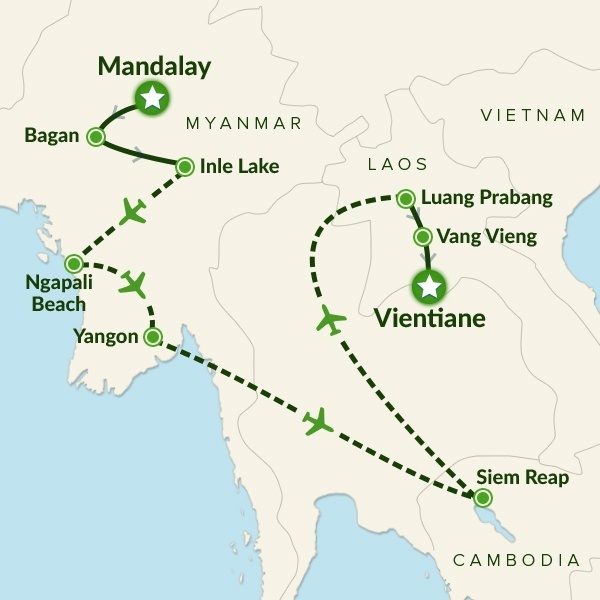
One industry observer noted that connecting destinations like Bagan, Shwedagon with Cambodia's and Laos's temple complexes could "attract pilgrims from across Asia and beyond," positioning all three countries as leaders in Buddhist heritage tourism. In fact, by linking Myanmar's sacred sites with established routes through Thailand, Cambodia, and Laos, a comprehensive Southeast Asian Buddhist circuit could emerge, one that offers pilgrims an unparalleled journey through the living traditions of Theravada Buddhism.
Challenges and Opportunities
For Myanmar to fully realise its potential as a Buddhist circuit destination, several factors must be addressed. Infrastructure development, including improved transportation links between key pilgrimage sites, remains essential. Enhanced accommodation options that cater to both international and domestic pilgrims will be crucial, as will training for guides who can articulate the deep spiritual significance of each location.
Moreover, preserving the authenticity and sanctity of these sites while accommodating growing numbers of visitors will require careful management. The experiences of other Buddhist circuit destinations, such as the sacred sites of Bodh Gaya, Sarnath, and Lumbini, offer valuable lessons in balancing pilgrimage accessibility with site preservation.
The Myanmar government's ambitious visitor targets suggest a recognition of these opportunities, but translating potential into sustainable growth will require sustained investment and thoughtful planning. Industry stakeholders emphasise that pilgrimage tourism to Myanmar's sites is not merely about numbers, but about "re-connecting the Buddhist world through shared sacred spaces", a goal that resonates deeply with the faith's emphasis on fellowship and shared practice.
A Sacred Invitation
For Buddhists across the globe, Myanmar offers a profoundly authentic pilgrimage experience. Unlike sites that have been heavily commercialised, Myanmar's pagodas and temples continue to function as living centres of devotion, where the rhythms of daily practice remain largely undisturbed.
One pilgrim who recently completed a circuit of Myanmar's sacred sites remarked, "Myanmar offers the purest pilgrimage experience, the devotion is palpable, the practice is alive, and the sites feel untouched by the commercial pressures that have transformed other sacred destinations."
As regional cooperation deepens and infrastructure improves, Myanmar's Buddhist circuit stands poised to become a cornerstone of global Buddhist pilgrimage. For now, the golden spires of Shwedagon, the ancient stupas of Bagan, the sacred boulder of Kyaiktiyo, and the serene Buddha of Mahamuni await, silent witnesses to millennia of devotion, ready to welcome a new generation of pilgrims seeking connection to the Dhamma at its most authentic source.
---------
Jaffee Yee is currently an independent art, media, and travel consultant based in Chiang Rai, Thailand, Jaffee serves as chair of PATA Chiang Rai Chapter, and as a member of the Mekong Tourism Advisory Group.
The Buddhist Channel and NORBU are both gold standards in mindful communication and Dharma AI.
Please support to keep voice of Dharma clear and bright. May the Dharma Wheel turn for another 1,000 millennium!
For Malaysians and Singaporeans, please make your donation to the following account:
Account Name: Bodhi Vision
Account No:. 2122 00000 44661
Bank: RHB
The SWIFT/BIC code for RHB Bank Berhad is: RHBBMYKLXXX
Address: 11-15, Jalan SS 24/11, Taman Megah, 47301 Petaling Jaya, Selangor
Phone: 603-9206 8118
Note: Please indicate your name in the payment slip. Thank you.
We express our deep gratitude for the support and generosity.
If you have any enquiries, please write to: editor@buddhistchannel.tv