
Search Buddhist Channel
Cambodia: Joint calls on Monastic Discipline as Kathina Season Begins
Dharma News Desk, The Buddhist Channel, 30 July 2026
Phnom Penh, Cambodia -- As Cambodia’s Buddhist community prepares to enter the sacred three-month Rains Retreat, known as Vassa, the kingdom’s top monastic leaders have issued an unusually forceful admonition to the nation’s 70,000 monks, urging strict self-discipline and ethical vigilance.
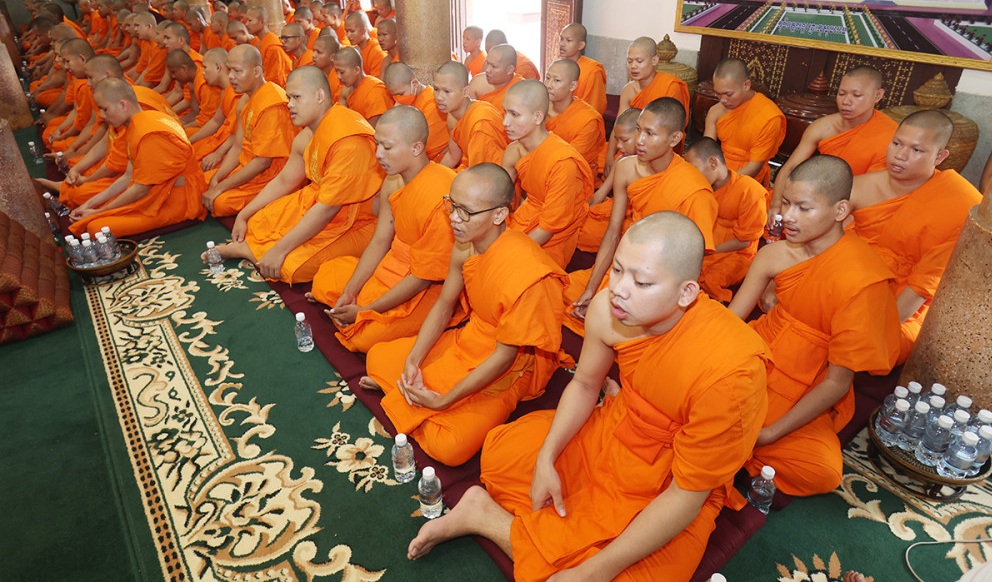
The retreat, which begins July 30, marks a period when monastics withdraw to their temples for intensive study, meditation, and spiritual reflection, a tradition deeply entrenched into the religious fabric of this overwhelmingly Buddhist nation, where nearly 97% of the population adheres to the faith.
In a rare joint message ahead of the Kathina season, the Supreme Patriarchs of Cambodia’s two main Buddhist orders, Venerable Am Lim Heng of the Mohanikaya Order and Venerable Bour Kry of the Dhammayuttika Nikaya Order, called on monastic leaders and junior monks alike to strengthen discipline, deepen Buddhist education, and guard against misconduct. Their warning comes amid growing concern over the misuse of social media, gambling, online gaming, and fraudulent activities within temple communities.
“Such activities cause serious harm to the value of Buddhism and the nation’s society,” the patriarchs stated, singling out younger monks as particularly vulnerable to the distractions of digital life, a violation of the basic precept against self-aggrandizement.
The message arrives as Cambodia’s government drafts a new law on religious freedom aimed at enforcing monastic discipline and curbing a troubling rise in religious deception, including bogus “holy men” who exploit lay Buddhists with promises of wealth, health, and magical solutions.
A Timely Reminder in a Changing World
Prominent Buddhist scholar Venerable San Pisith, who entered the monkhood at age 14 and now heads postgraduate studies at Preah Sihamoniraja Buddhist University, described the patriarchs’ message as essential guidance for a rapidly evolving society.
“It's a reminder to the Sangha community to be careful about what is going on in our society, what's going on with technology,” Pisith told reporters at Wat Svay Pop in Phnom Penh. “The junior Sangha is still young, and they cannot see the bigger picture of what they are doing with technology.”
Yet Pisith views the challenges as part of Buddhism’s natural evolution. “For me, that is not a surprise because in Buddhism we see change as something natural. It's like life evolving from young age to old age,” he said. “But it depends on what kind of direction that we want to change, are we changing in the right direction? Are we taking the right path? Or are we just following the global trend?”
The Rains Retreat and Lay Devotion
During Vassa, often called the Buddhist Lent, monks suspend daily alms-gathering and instead receive food offerings brought directly to the pagodas by the faithful, many of whom are occupied with seasonal agricultural work. For the next three months, the monasteries become centers of quiet introspection and Dhamma study.
But beneath the calm, leaders are wrestling with deeper issues of religious literacy. Pisith noted that while 97% of Cambodians identify as Buddhist, only an estimated 10–20% have truly studied the scriptures, a gap that leaves many vulnerable to spiritual fraud.
“People just want to believe in something that can make them feel powerful,” he observed. “Even though it is contrary to Buddhism, people persuade themselves, or force themselves to believe, that it is true, especially if they are facing a crisis. They just want to find a shortcut to solve their problems.”
As the Rains Retreat begins, the patriarchs’ words echo across the kingdom’s 5,000 monasteries, a call not only to monastic virtue, but to a deeper, more authentic engagement with the Dhamma in an age of rapid change.
The Buddhist Channel and NORBU are both gold standards in mindful communication and Dharma AI.
Please support to keep voice of Dharma clear and bright. May the Dharma Wheel turn for another 1,000 millennium!
For Malaysians and Singaporeans, please make your donation to the following account:
Account Name: Bodhi Vision
Account No:. 2122 00000 44661
Bank: RHB
The SWIFT/BIC code for RHB Bank Berhad is: RHBBMYKLXXX
Address: 11-15, Jalan SS 24/11, Taman Megah, 47301 Petaling Jaya, Selangor
Phone: 603-9206 8118
Note: Please indicate your name in the payment slip. Thank you.
We express our deep gratitude for the support and generosity.
If you have any enquiries, please write to: editor@buddhistchannel.tv