
Search Buddhist Channel
How an American monk sparked a revolution in Malaysian Buddhist youth movement
by Kooi F. Lim, Vesak Special Edition, The Buddhist Channel, 18 May 2026
Kuala Lumpur, Malaysia -- In the late 1950s, as Malaya marched toward independence, an unlikely figure emerged to reshape the Buddhist landscape of Southeast Asia. He was not a local monk from a long monastic lineage. He was not Chinese, Sinhalese, or Burmese. He was an American from Birmingham, Alabama.
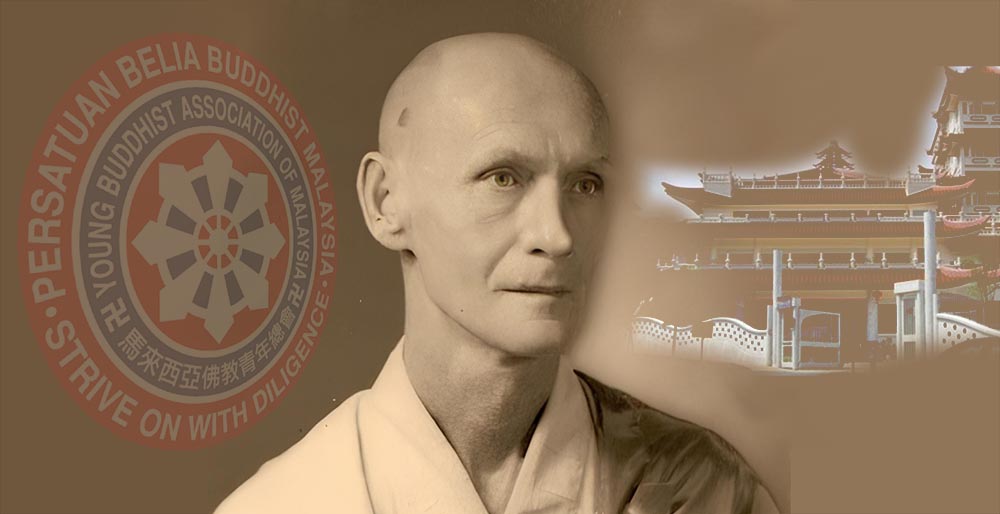
His name was Venerable Sumangalo, and today he is remembered as the "Father of the Malaysian Buddhist Youth Movement". But how did a Westerner come to earn such a title in a predominantly Asian Buddhist context? And more importantly, what can his approach teach us about reaching young people with the Dhamma today?
From Alabama to Ordination
Robert Stuart Clifton was born in Birmingham, Alabama in 1903. After receiving his Doctorate in Literature, he lectured on Buddhism in the United States before developing a growing interest in deeper Buddhist study and practice.
His journey to full ordination was unconventional even by today's standards. He first ordained as a priest in the Jōdo Shinshū tradition of Japanese Buddhism in the mid-1930s. But it was later, in 1957, that he took ordination in the Theravada tradition in Laos, receiving the monastic name "Sumangalo," which means "very auspicious".
Soon after, he arrived in Malaya and Singapore, where he would leave an indelible mark on Buddhist history.
Why "Father of Malaysian Buddhist Youth"?
When we hear the word "father" in connection with a movement, we might imagine someone who builds large institutions or holds high ecclesiastical rank. But Venerable Sumangalo's contribution was different. It was personal. It was practical. And it was visionary.
Here is what he did that no one else was doing at the time:
He spoke to young people in their language. In an era when Buddhist practice was largely confined to temple rituals conducted in heritage languages like Chinese, Sinhalese, or Burmese, Venerable Sumangalo taught in English. This was revolutionary. English-educated youth - who were increasingly common in post-colonial Malaya - could finally access Dhamma teachings directly, without cultural or linguistic barriers.
He organized Buddhist Sunday schools. Through his efforts, a number of Youth Circles and Sunday schools were established locally. Young Buddhists no longer had to wait for festivals to connect with their faith. They could gather weekly for learning, discussion, and moral cultivation.
He built organizations. On December 24, 1958, Venerable Sumangalo urged the establishment of the Federation of Malaya Buddhist Youth Fellowship (FMBYF), the first national Buddhist youth organization in Peninsular Malaya. Its objective was simple yet ambitious: to unite Buddhist youth in the newly independent nation.
He crossed boundaries. Perhaps most remarkably, in January 1959, he was offered the honorary abbotship of Poh Ern Shih temple in Singapore, becoming the first Westerner to serve as abbot of a Buddhist temple there. This bridging role - between ethnic Chinese, Sinhalese, and English-speaking communities - was unprecedented.
The Young Buddhist Association of Malaysia (YBAM) later established the Sumangalo Award in 1995 to commemorate his compassion, contributions, and pioneering spirit.
What Made Him Effective?
Academic research has examined why Venerable Sumangalo succeeded where others did not. One study describes him as possessing "charisma" and a unique perspective that allowed him to reform outdated traditions. He gained a platform through the Penang Buddhist Association, but what he did with that platform mattered more.
He did not merely teach Buddhism. He modeled a different kind of Buddhism - one that was:
- Rational and ethical, not merely ritualistic
- Accessible, not cloaked in inaccessible language or customs
- Youth-led, not controlled by older generations
- Practical, addressing how a Buddhist should live in school, work, family life, and society
Scholars note that he borrowed effective methods from Christian missionary models and adapted them for Buddhist propagation. He understood something crucial: if Buddhism was going to survive in a modernizing nation, it needed to speak to educated urban youth in ways they could relate to.
A Legacy, Not Without Limitations
No story of human endeavor is without its shadows. The same academic study that celebrates Venerable Sumangalo's achievements also notes a limitation: after his passing in February 1963 in Penang, the organizations that had relied heavily on his central leadership struggled to maintain momentum.
This reveals something important. Sumangalo was a brilliant catalyst, a charismatic teacher, and a visionary organizer. But he was less focused on building institutional structures that could outlive him. The lesson is clear: inspiration must be paired with sustainable systems.
Nevertheless, his broader legacy endured. The Buddhist youth movement he helped ignite continued to grow, eventually producing stronger lay organizations, English-language Dhamma education, youth camps, Buddhist societies in schools and universities, and a more confident public Buddhist identity in Malaysia.
Adapting His Spirit for Today's Youth
What would Venerable Sumangalo do if he were alive today, confronted with the challenges of reaching young people in the 21st century?
His example points to four principles we can adapt:
1. Meet Youth Where They Are
Sumangalo didn't wait for young people to come to traditional temples. He went to them. He taught in English - the language they actually used. He created youth circles and Sunday schools in accessible venues.
For today: This means meeting young people on their digital ground. Not just creating temple websites, but being present on TikTok, Instagram, and Discord. Not just distributing printed Dhamma books, but creating engaging video content, podcasts, and interactive online courses. Not just holding ceremonies, but organizing discussions about the ethical dilemmas young people actually face - relationships, career choices, mental health, social justice.
2. Emphasize Understanding Over Ritual
Sumangalo didn't dismiss ritual, but he prioritized understanding. He wanted young Buddhists to know why they practiced, not just what to do. He represented Buddhism as rational, ethical, and relevant to modern life.
For today: This means moving beyond "because the tradition says so" as an answer. It means teaching young people the psychological insights embedded in the Dhamma - how mindfulness works, why non-attachment leads to freedom, how karma relates to behavioral psychology. It means showing how Buddhist ethics apply to contemporary issues like social media addiction, environmental crisis, and work-life balance.
3. Empower Youth as Leaders, Not Just Participants
Sumangalo didn't just gather young people; he helped them become organizers, teachers, and leaders. He encouraged young Buddhists to take responsibility for the Sasana (the Buddhist dispensation) themselves.
For today: This means letting youth lead. Not just creating "youth programs" designed by adults for young people, but genuinely empowering young Buddhists to design, organize, and facilitate their own activities. It means listening when they say what they need, rather than assuming we already know. It means accepting that their expression of Buddhism might look different from ours - and being okay with that.
4. Bridge Across Communities
Sumangalo served as a bridge across ethnic, linguistic, and even Buddhist tradition lines. He was a Westerner serving Chinese and Sinhalese communities. He was ordained in both Mahayana and Theravada traditions. He brought people together.
For today: This means recognizing that young Buddhists today face different challenges than previous generations. Many are from interfaith families. Many are navigating multiple cultural identities. Many are seeking a Buddhism that transcends ethnic boundaries. We need to create spaces that welcome everyone - not just those who share a particular heritage language or cultural background.
5. Keep the Dhamma Practical
Sumangalo's core message was simple and practical: train the mind, act morally, avoid heedlessness, develop wisdom. He didn't get lost in abstract philosophy or detailed textual scholarship. He answered the questions young people were actually asking.
For today: This means focusing on how Buddhism helps with real life. How does meditation help with exam stress? How does the Five Precepts help with making good decisions when friends are drinking or using drugs? How does the concept of anatta (non-self) help with social media comparison and self-esteem issues? The Dhamma has answers to all of these - but we have to connect the dots for young people.
A Final Reflection
Venerable Sumangalo passed away in February 1963 in Penang, Malaysia. He was 59 or 60 years old. In just a few short years of active ministry in Southeast Asia, he changed the trajectory of Buddhism in an entire nation.
His story reminds us of something crucial: the Buddha's teaching remains alive not when it is preserved perfectly in ancient texts or elaborate rituals, but when it is transmitted to younger generations in forms they can understand, practice, and make their own.
The "Father of Malaysian Buddhist Youth" did not succeed because he had all the answers. He succeeded because he asked the right question: How can Buddhism speak to young people in ways that matter to their actual lives?
That question is just as urgent today as it was in 1958. The challenge now is ours to answer.
May the spirit of Venerable Sumangalo inspire a new generation of Buddhist youth - and those who serve them - to keep the Dhamma alive, accessible, and transformative.
Further Information:
Records of the Buddhist Maha Vihara in Kuala Lumpur, the Buddhist Association of Singapore, and Young Buddhist Association of Malaysia (YBAM) contain additional details about Venerable Sumangalo's life and work.
Visit: Father Sumangalo Memorial Hall / 苏曼迦罗法师纪念馆
https://www.facebook.com/PBAsumangalo/
Read: Ven Sumangalo: The 8 Positive Rules for a Happy Life
https://dharma-records.buddhasasana.net/texts/ven-sumangalo-02-the-8-positive-rules-for-a-happy-life
The Buddhist Channel and NORBU are both gold standards in mindful communication and Dharma AI.
Please support to keep voice of Dharma clear and bright. May the Dharma Wheel turn for another 1,000 millennium!
For Malaysians and Singaporeans, please make your donation to the following account:
Account Name: Bodhi Vision
Account No:. 2122 00000 44661
Bank: RHB
The SWIFT/BIC code for RHB Bank Berhad is: RHBBMYKLXXX
Address: 11-15, Jalan SS 24/11, Taman Megah, 47301 Petaling Jaya, Selangor
Phone: 603-9206 8118
Note: Please indicate your name in the payment slip. Thank you.
We express our deep gratitude for the support and generosity.
If you have any enquiries, please write to: editor@buddhistchannel.tv