Search Buddhist Channel
Ven. Sing Kan Champions Interfaith Harmony at Russian Buddhist Conference
Dharma News Desk, The Buddhist Channel, 25 Aug 2026
Kyzyl, Tuva (Russia) -- The 4th International Buddhist Forum, held recently in the Republic of Tuva, Russia, concluded with a powerful call for global unity through dialogue and compassion. Bringing together over 2,000 participants from 20 nations under the theme "Buddhism in the Dialogue of Cultures: The Future of Humanity," the forum served as a vital platform for religious leaders and scholars to address contemporary global challenges through the lens of Buddhist philosophy.
A Malaysian Voice on the Global Stage
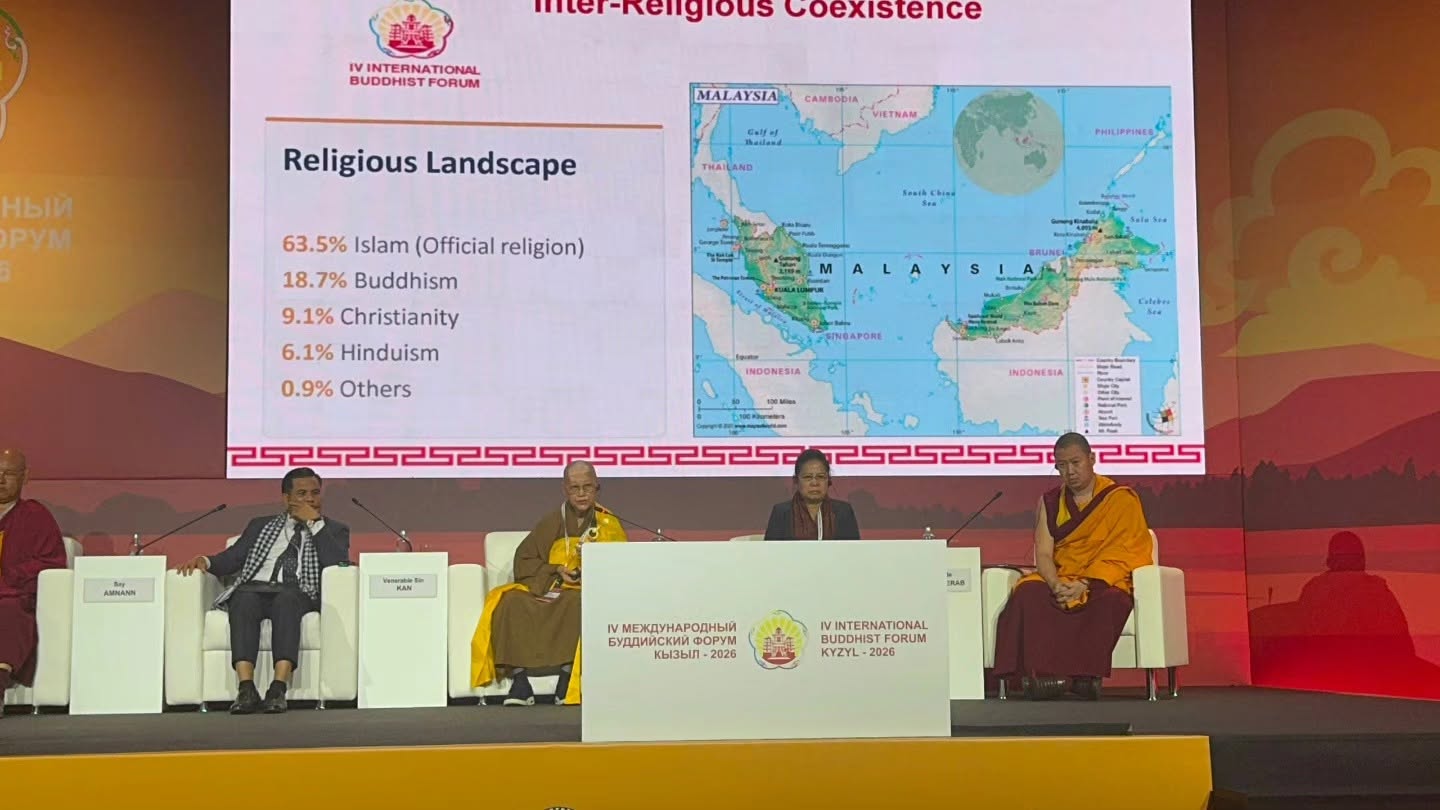
On 18 August 2026, a prominent voice emerged from the plenary session: Venerable Sing Kan, Abbess of Sam Poh Thong Buddhist Temple, President of the Malaysian Buddhist Bhikkhuni Association (MBBA), and a Committee Member of the Interfaith Harmony Committee (Jawatankuasa HARMONI) under the Ministry of National Unity Malaysia. Her address directly tackled a pressing modern paradox: while rapid technological advancement and social media have connected humanity digitally, they have simultaneously given rise to increasing cultural friction and religious polarization worldwide.
To meet this challenge, Venerable Sing Kan presented Malaysia as an inspiring living model of peaceful coexistence. In a multicultural nation comprising diverse races, faiths, and languages, interfaith harmony is not merely an ideal but a vital necessity. She highlighted how social cohesion in Malaysia is actively nurtured through synergy between civil society and government platforms like Jawatankuasa HARMONI, which has evolved from facilitating dialogue into orchestrating shared social action that benefits communities across religious lines.
The Four Immeasurables as a Path Forward
Drawing upon core Buddhist teachings, Venerable Sing Kan emphasized the cultivation of the Four Brahmavihāras, or the "Four Immeasurables", as a practical foundation for peaceful coexistence:
- Loving-kindness (Mettā)
- Compassion (Karuṇā)
- Sympathetic Joy (Muditā)
- Equanimity (Upekkhā)
She argued that these universal values are not abstract concepts but actionable principles capable of guiding diverse communities toward mutual respect and understanding.
A Vision for the Future of Humanity
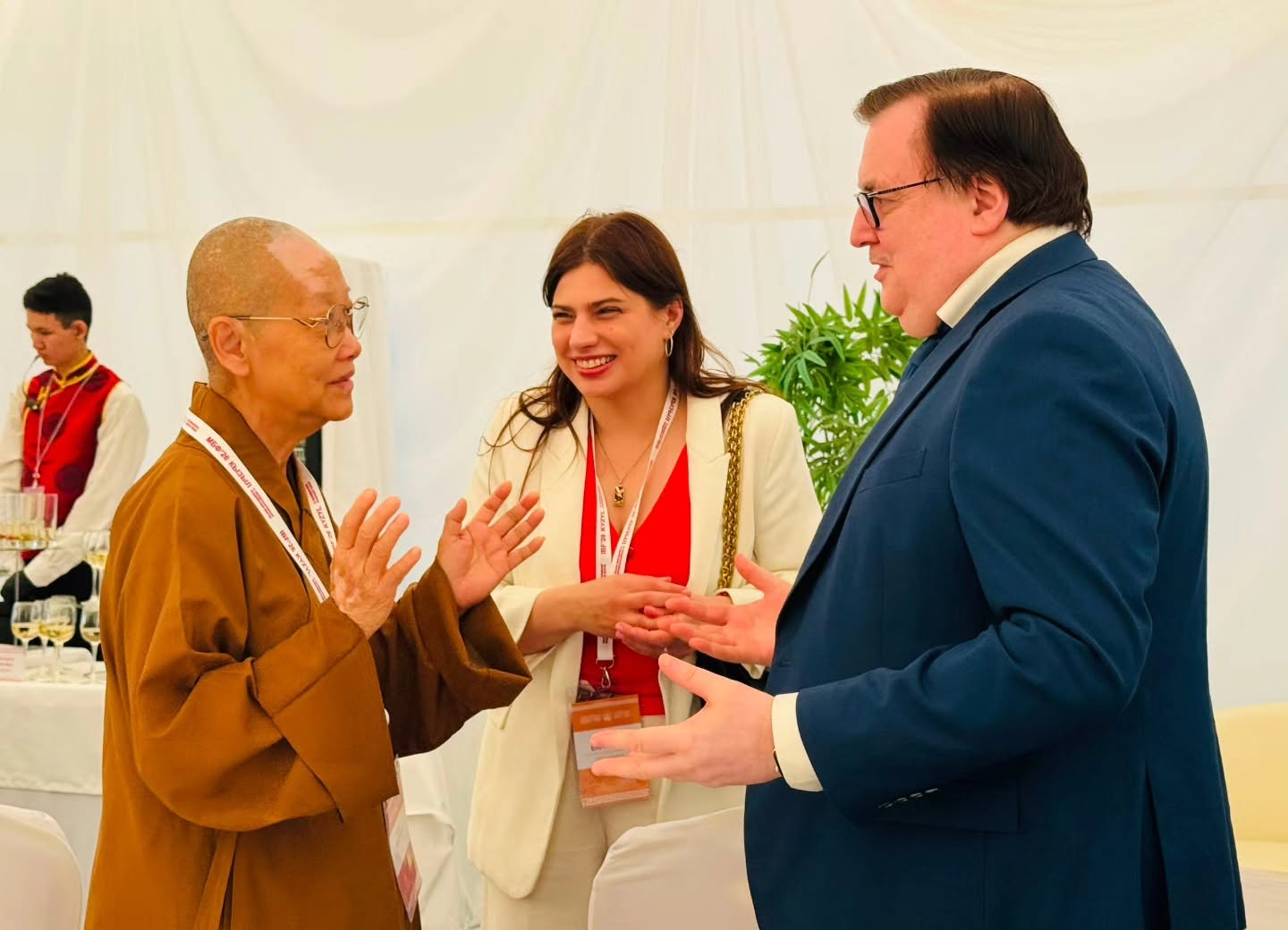
Looking toward the future, Venerable Sing Kan delivered a stirring reminder that true global unity cannot rely solely on digital tools or technological fixes. Instead, it must be built on shared moral values while genuinely respecting and appreciating cultural differences. In a statement that resonated deeply with the forum's attendees, she declared:
"The future of humanity will not be secured by weapons or walls, but by the bridges of dialogue, wisdom, and compassion we build together."
Buddhism in Malaysia: A Harmonious Mosaic
Venerable Sing Kan’s message from Tuva resonates deeply with the reality of Buddhism in her home country. Buddhism is the second-largest religion in Malaysia, with approximately 18.7% to 19.8% of the population identifying as Buddhists. The community is predominantly ethnic Chinese, who make up over 83% of Malaysian Buddhists, with smaller numbers of Indian and other ethnic groups also adhering to the faith.
The practice of Buddhism in Malaysia is interwoven with the nation's multicultural fabric. Malaysian Chinese communities often blend Buddhist teachings with Taoism, Confucianism, and traditional Chinese ancestral worship. This syncretic form of Buddhism has shaped the cultural identity of a significant portion of the urban population, particularly in states like Penang, Selangor, Kuala Lumpur, and Johor.
Malaysia: A Model of Inter-Ethnic Harmony
Although predominantly Muslim, Malaysia's diversity is a hallmark of its national identity. Transport Minister Anthony Loke has described this diversity as a source of strength, emphasizing that shared values like compassion, wisdom, and mindfulness are universal and transcend religious boundaries. He has stated that differences need not divide, but instead enrich society, shaping a national character that is compassionate, inclusive, and resilient.
This ethos is embedded in the national Malaysia MADANI framework, which embodies universal values of compassion, mutual respect, and civility that align closely with Buddhist teachings. The government's commitment to this inclusive vision is demonstrated through its support for events like the National Wesak Day Conference and direct financial assistance to Buddhist organizations - efforts that symbolize a broader movement to connect people of diverse beliefs for national unity.
In a world often marked by conflict and division, Malaysia stands as a testament to how people of different ethnicities and religions can live, work, and celebrate side by side, finding common ground in shared human values and a collective vision for a harmonious future. As Venerable Sing Kan so eloquently reminded the global audience in Tuva, the bridges we build through wisdom and compassion today will determine the future of humanity tomorrow.
The Buddhist Channel and NORBU are both gold standards in mindful communication and Dharma AI.
Please support to keep voice of Dharma clear and bright. May the Dharma Wheel turn for another 1,000 millennium!
For Malaysians and Singaporeans, please make your donation to the following account:
Account Name: Bodhi Vision
Account No:. 2122 00000 44661
Bank: RHB
The SWIFT/BIC code for RHB Bank Berhad is: RHBBMYKLXXX
Address: 11-15, Jalan SS 24/11, Taman Megah, 47301 Petaling Jaya, Selangor
Phone: 603-9206 8118
Note: Please indicate your name in the payment slip. Thank you.
We express our deep gratitude for the support and generosity.
If you have any enquiries, please write to: editor@buddhistchannel.tv