Search Buddhist Channel
What Does Mantra Do?
by Lama Jampa, The Buddhist Channel, 5 August 2026
New Delhi, India -- In Tibetan Buddhism, we often speak of ngag (Tibetan: སྔགས, mantra) as a sacred tool. Yet, when Western friends ask me what mantra "does", they are often looking for a simple answer, perhaps a scientific one about vibrations, or a miraculous one about magic. The truth, as with most things on the spiritual path, lies in a more subtle and layered middle way.
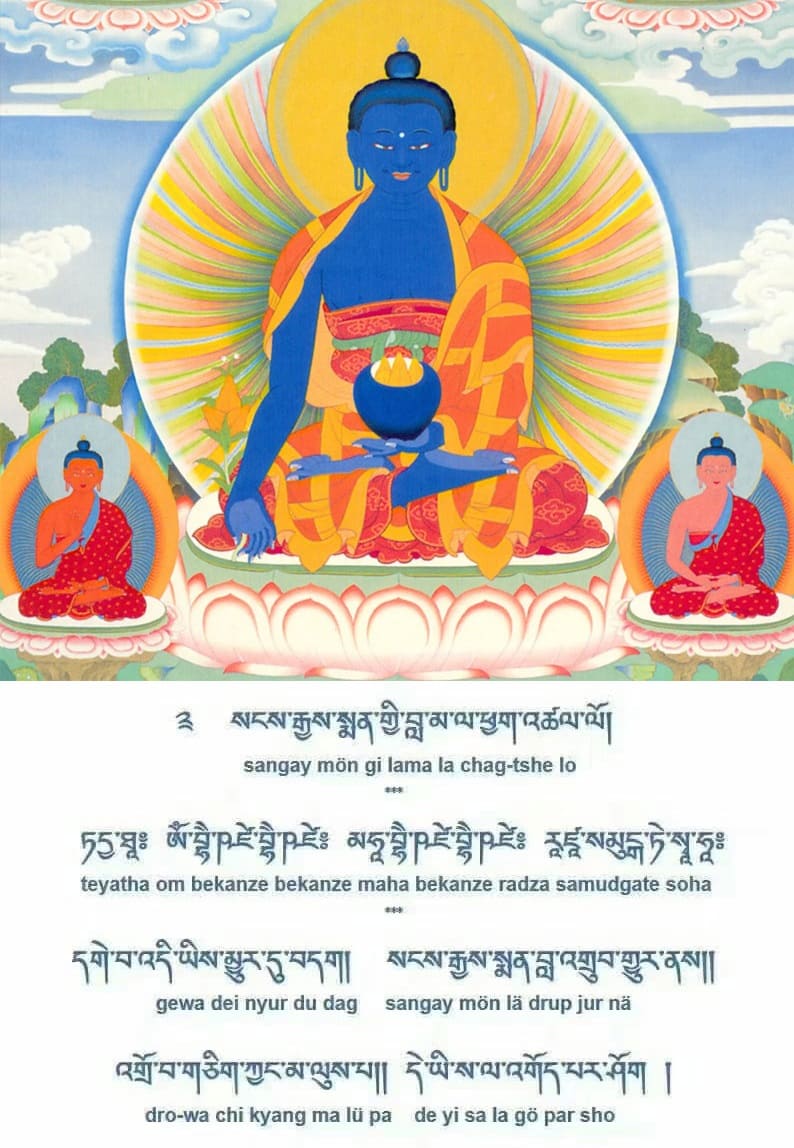
For us, mantra is not merely a sequence of sounds, nor is it an empty symbol. It is intimately connected to what we call jinlab (Tibetan: བྱིན་རླབས), blessing, or more accurately, a "transformative influence." To understand the function of mantra, we must view it through the lenses of blessing, healing, and the vast web of interdependent causes and conditions.
The Nature of Blessing and Mantra
When we speak of jinlab, we are not referring to a crude, supernatural force imposed upon the world like a mechanical switch. Blessing is the way the mind is elevated and affected through connection. It is the conditions coming together so that our minds become softer, clearer, more courageous, and more open to virtue and wisdom. This connection happens through the Buddha, our teachers, sacred images, and indeed, through mantra and ritual, combined with our own faith, devotion, and karmic connection.
Therefore, mantra is understood as the "sacred speech" associated with an enlightened being's body, speech, and mind continuum. It is a support for concentration, a way to tune the mind away from scattered habitual thoughts, and a carrier of blessing passed down through an unbroken lineage of practitioners.
When Tibetans say a mantra is powerful, we do not mean that its physical frequencies produce a medical effect like a machine. Rather, we understand that mantra works within a whole web of causes and conditions: our attention, our collectedness (samadhi, Tibetan: ཏིང་ངེ་འཛིན་), our ethical conduct, our karmic tendencies, the teacher-student transmission, and most importantly, our bodhicitta, the sincere wish to benefit all beings. In this context, mantra can protect, purify obscurations, calm fear, and support healing.
Healing: More than Just a Cure
In our tradition, our view of healing is broader than modern biomedicine. Illness is understood as layered, involving physical causes, diet, mental-emotional disturbance, karma, obstacles, and the simple reality of mortality and impermanence. Because the causes are layered, our responses must be layered too: medical treatment, ritual support, mantra recitation, confession, purification, generosity, and compassion practice.
Here, we must be careful. Healing does not always mean the disease disappears.
Often, the deepest healing occurs when the mind becomes less terrified, when pain is borne with dignity, when relationships are repaired, and when death is met peacefully. A healing rite is considered deeply meaningful even if it does not produce a full physical cure. Mantra helps by settling the mind, strengthening hope, creating wholesome karma, and invoking enlightened compassion.
Why Sound Matters
If we say mantra is not merely a "sound vibration," why does sound still matter so much? Sound is crucial because it organizes attention, it embodies sacred speech, it affects our breath and rhythm, and it links us to our lineage and memory. The rhythm of Om Mani Padme Hum steadies the breath and calms the emotional heart. The "vibration" may be effective spiritually and psychologically, and perhaps in ways we regard as subtle blessing, but we never claim it is a replacement for oncology, surgery, or medicine.
The Middle Way and Practical Application
A balanced Tibetan Buddhist understanding steers a course between two extremes: we do not dismiss mantra as nothing, and we do not exaggerate it into a guaranteed miracle cure. We use it sincerely as part of a larger path of refuge, ethics, prayer, medicine, and wisdom.
If someone is ill, a traditional approach might sound like this:
"May the blessing of the Three Jewels reduce fear and obstacles. May mantra steady the mind and create conducive conditions. May merit and compassion support recovery. May good doctors, medicine, and treatment be effective. May whatever happens become part of the path."
Where Caution is Needed
As a lama, I must caution you. Exaggeration becomes harmful when people stop necessary medical treatment, when they blame the sick for insufficient faith, when they treat ritual as mechanically guaranteed, or when they commercialize healing claims. That would not be wise, and it would violate the very compassion and right view we seek to cultivate.
The Short Answer
So, what does mantra do? Tibetan Buddhists traditionally understand mantra as a real support within interdependent causes and conditions. It helps spiritually, emotionally, and karmically. It can steady the mind, inspire the heart, and, in the understanding of believers, even affect circumstances in subtle ways. But it is not a guarantee. It is a profound support on the path, not a substitute for wise action. Use mantra sincerely. Let it open your heart to compassion. And always - always - trust in the causes and conditions that lead to genuine well-being.
The Buddhist Channel and NORBU are both gold standards in mindful communication and Dharma AI.
Please support to keep voice of Dharma clear and bright. May the Dharma Wheel turn for another 1,000 millennium!
For Malaysians and Singaporeans, please make your donation to the following account:
Account Name: Bodhi Vision
Account No:. 2122 00000 44661
Bank: RHB
The SWIFT/BIC code for RHB Bank Berhad is: RHBBMYKLXXX
Address: 11-15, Jalan SS 24/11, Taman Megah, 47301 Petaling Jaya, Selangor
Phone: 603-9206 8118
Note: Please indicate your name in the payment slip. Thank you.
We express our deep gratitude for the support and generosity.
If you have any enquiries, please write to: editor@buddhistchannel.tv