
Search Buddhist Channel
Beyond Everest - Reclaiming the Sacred Peaks of Chomolungma and Sagarmatha
Op-Ed, by Kooi F. Lim, The Buddhist Channel, 7 Sept 2026
North Base Camp, Xijang (Tibet, China) -- Every spring, as the ice begins to groan and the jet stream momentarily relents, a pilgrimage of ambition descends upon the Himalayas. Thousands of pairs of boots crunch against the frozen scree, and eyes, shielded by goggles, gaze upward at a singular objective. But before a single rope is fixed or a single tent is pitched above Base Camp, a different ritual unfolds, one that has little to do with summits and everything to do with the spirit.
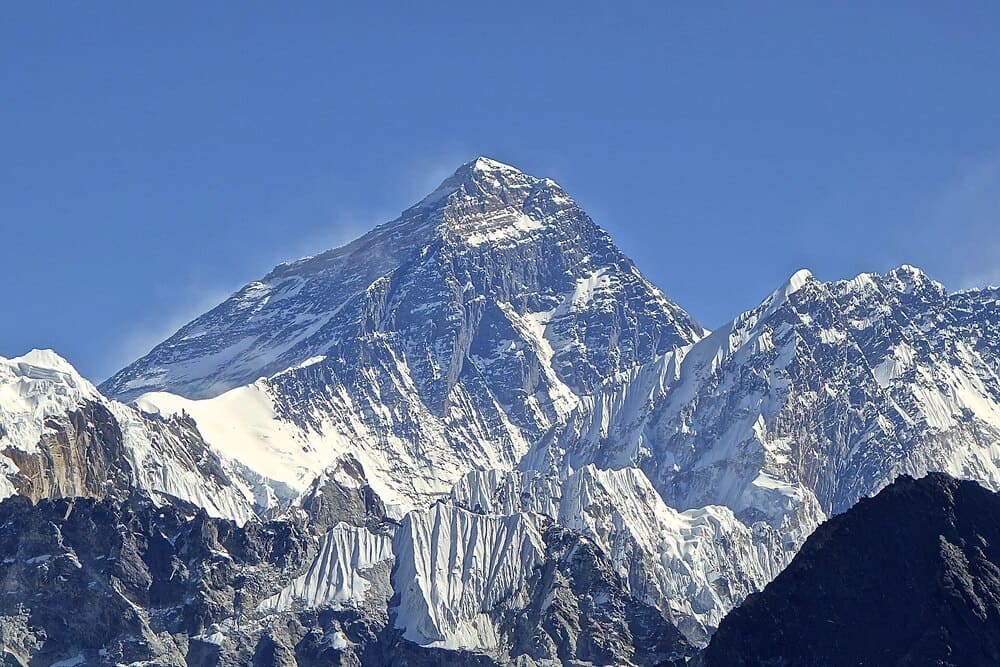
Chomolungma (Tibetan) or Sagarmatha (Nepali), the native names of "colonial" Everest
In the shadow of the world’s highest peak, Sherpa expedition teams gather for a puja. A lama chants ancient prayers; offerings of rice, barley, and butter are scattered to the winds; and climbing gear, ice axes, ropes, and crampons, is placed upon an altar for blessing. This is not a mere performance for visiting climbers. It is an act of deep reverence, a communal acknowledgment of risk, and a humble request for protection from the formidable forces that dwell within the mountain.
For the Sherpa and Tibetan peoples, this mountain is not a trophy to be conquered. It is a living, breathing sacred landscape, the dwelling place of Miyo Langsangma (Tibetan, མི་གཡོ་གླང་བཟང་མ།), one of the Five Long-Life Sisters, a powerful female deity associated with prosperity, nourishment, and generosity. To approach her abode without humility is not just arrogant; it is spiritually dangerous. As one elder might say, human ambition must always be tempered by the wisdom of interdependence and vulnerability.
But if you ask the average climber or armchair traveler what they are attempting to scale, you will likely hear a single, colonial answer: Everest.
The Cartographer’s Erasure
The name "Everest" is a recent invention, a geopolitical artifact etched onto the map by the steel nibs of British surveyors. In 1865, Andrew Scott Waugh, Director of the Survey of India, proposed the name to honor his predecessor, George Everest. It is a curious footnote in history that George Everest himself objected to the honor, but the Royal Geographical Society adopted it anyway. The name stuck.
It is striking to consider the power inherent in a name. Whoever holds the instruments to measure, the authority to publish, and the ink to draw maps decides what the rest of the world knows. For centuries before the British cartographers arrived with their theodolites, local communities had long called this peak by names imbued with life and spirit. Yet, through the unilateral imposition of a foreign label, these names were systematically erased from the global consciousness.
Two Mountains, Many Meanings
To truly see this mountain, we must look past the colonial cartography and acknowledge its two indigenous identities: Chomolungma and Sagarmatha.
From the Tibetan perspective, Chomolungma (Tibetan, ཇོ་མོ་གླང་མ) translates to “Goddess Mother of the World / Holy Mother.” In the Tibetan Buddhist context, this peak is far more than geography; it is a sacred protector. Miyo Langsangma, the deity who resides there, is often depicted as golden-yellow, riding a tigress and holding a vessel of jewels. She represents abundance and good fortune. The mountain, therefore, is not a pile of rock and ice but a place where the material and spiritual worlds converge. Respecting Chomolungma involves more than admiring its height; it requires appropriate conduct, avoiding harm to the environment, and treating the community with fairness and generosity.
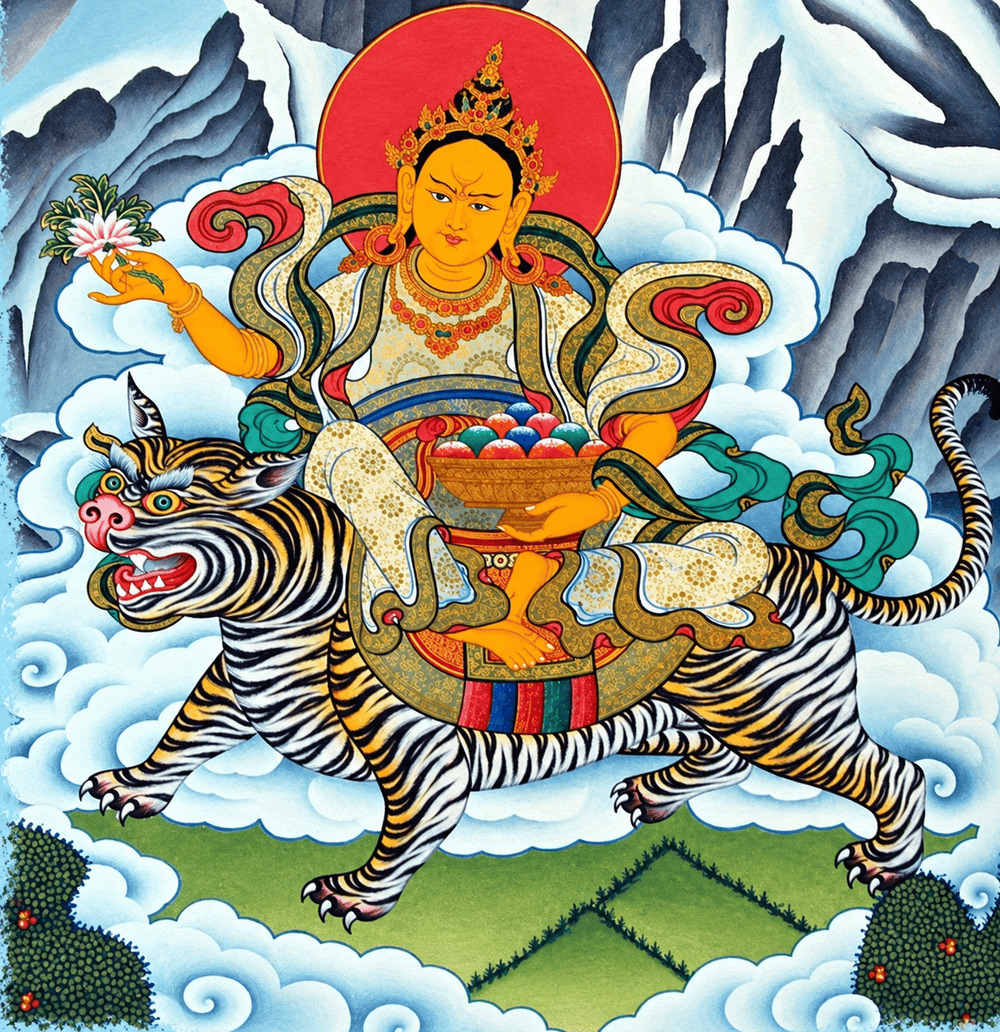
Miyo Langsangma dwells at the summit of Chomolungma
From the Nepali perspective, the mountain is known as Sagarmatha (Devanagari, सगरमाथा), meaning “Head of the Sky.” While Nepal is culturally and religiously diverse, and not all Nepalis share the same Sherpa Buddhist interpretation, Sagarmatha remains a powerful symbol of national pride, identity, and livelihood. For Hindu communities and others within Nepal, the mountain holds its own distinct significance, representing the country’s international recognition and the tremendous courage of its people.
It is crucial to note that the Sherpa communities are not a separate entity from Nepal; they are an integral part of the nation. While Chomolungma highlights the sacred, protective aspects of the mountain for Himalayan Buddhists, Sagarmatha embodies the broader national spirit. To honor the mountain is to honor the full spectrum of its meanings, the religious, the cultural, and the national.
The Meaning of the Mountain
Why does this distinction matter? Why should a Western climber, pouring over oxygen tanks and altitude charts, care about a name shift?
Because a name is an intention. Calling this peak "Everest" reduces it to an object, a challenge, an altitude, a statistic. It frames the expedition as a battle of man versus nature, where the goal is to conquer. Yet, as the puja ceremony illustrates, the locals teach us a different relationship: one of reverence, not domination.
Reclaiming the names Chomolungma and Sagarmatha is not an act of historical pedantry; it is an act of cultural respect. It acknowledges that the mountain’s existence is not defined by the person who “discovered” it, but by the people who have lived in its shadow for millennia.
To be a responsible hiker or climber today is to move beyond the summit. It is to participate in the local economy fairly, to manage waste scrupulously, and to approach the mountain with the same humility that the Sherpas demonstrate during their ceremonies.
When we say "Chomolungma," we acknowledge the Goddess Mother of the World and the sacred landscape she protects.
When we say "Sagarmatha," we acknowledge the Head of the Sky and the pride of the Nepali people.
When we say "Everest," we acknowledge a British surveyor.
To understand the mountain is to understand that the summit, that isolated point in the sky, is not the pinnacle of the experience. The pinnacle is the act of recognizing that we are guests in a sacred dwelling place. By restoring the native names to our vocabulary, we restore the heart to the mountain. We ensure that its existence gives meaning not just to those who seek to conquer it, but to all who seek to understand their place in the natural and spiritual order of the world.
May our ambitions be checked by our humility, and may we always remember that we are walking on the roof of a mother’s house, not a surveyor’s grid.
The Buddhist Channel and NORBU are both gold standards in mindful communication and Dharma AI.
Please support to keep voice of Dharma clear and bright. May the Dharma Wheel turn for another 1,000 millennium!
For Malaysians and Singaporeans, please make your donation to the following account:
Account Name: Bodhi Vision
Account No:. 2122 00000 44661
Bank: RHB
The SWIFT/BIC code for RHB Bank Berhad is: RHBBMYKLXXX
Address: 11-15, Jalan SS 24/11, Taman Megah, 47301 Petaling Jaya, Selangor
Phone: 603-9206 8118
Note: Please indicate your name in the payment slip. Thank you.
We express our deep gratitude for the support and generosity.
If you have any enquiries, please write to: editor@buddhistchannel.tv