Search Buddhist Channel
Brain Death, Vinnāṇa, and the Kamma of Letting Go
by A. Watchara, Special to the Dharma News Desk, the Buddhist Channel, 8 Oct 2026
Bangkok, Thailand -- I have spent thirty years reading EEGs and twenty as a practicing Buddhist. I have stood at the bedside of brain-dead patients, watched ventilators sigh in and out for bodies that would never breathe again, and sat with families who asked me the same question I now ask myself: Is it bad kamma to remove life support?
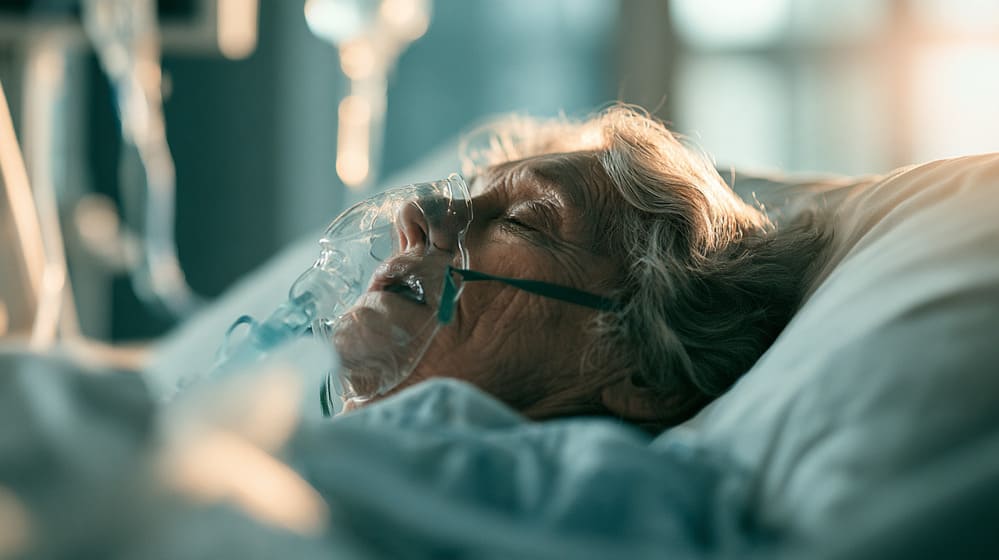
The question is not academic for me. I have signed the orders. I have watched the monitor flatline after the machine was silenced. And I have wondered, in the quiet that followed, whether I had just participated in killing or in letting go.
What Brain Death Actually Is
Let me be precise, because precision matters here. Brain death is not coma. It is not a vegetative state. It is the irreversible cessation of all function of the brain, including the brainstem, the part that governs breathing, heartbeat regulation, and consciousness itself. In Thailand, as in most countries with modern medical systems, brain death is legally and medically recognized as death.
A ventilator can keep oxygen circulating after brain death. The heart may continue to beat. The body may feel warm. But the person, the being who thought, felt, remembered, loved, is gone. The machine is not sustaining life. It is sustaining a body from which life has already departed.
This is what I was trained to believe. This is what the evidence supports. And yet, as a Buddhist, I cannot simply stop there.
Vinnāṇa Is Not the Brain
The Buddha did not have EEG machines. He did not know about brainstem reflexes or apnea tests. What he taught was that vinnāṇa, consciousness, is not a permanent, independent self or unchanging essence. It is dependently arisen, a conditioned process, not a thing that can be located in the brain or anywhere else. It arises in dependence on conditions: the six senses, contact, feeling, perception, volition. It is a stream, a flame that burns as long as fuel remains. When the conditions cease, the flame goes out, but it was never a separate entity to begin with.
Modern neuroscience tells us that consciousness depends on the brain. But Buddhist teaching does not say that consciousness is the brain. It says consciousness is conditioned. The brain may be the primary condition for human consciousness in this life, but the Dhamma does not reduce vinnāṇa to grey matter.
This matters because it means I cannot say with certainty that when the brain dies, consciousness ceases immediately. The early Pali sutta texts describe the dying process as gradual. Tibetan traditions speak of the clear light and the dissolution of elements. Thai forest monks have told me of sitting with the dying for hours, sometimes days, believing that awareness may linger even when the body seems still.
I do not know. And that not-knowing is the honest position.
What the Texts Actually Say About Death
The early Buddhist texts do distinguish death from other states, but not in the way modern medicine does. In the Mahāvedalla Sutta (MN 43), Sāriputta is asked about the difference between a dead body and someone who has attained meditative cessation, the temporary suspension of perception and feeling known as nirodha-samāpatti. His answer is worth recalling carefully.
A dead body, he says, is characterized by three things: exhausted vitality (āyu), dissipated heat (usmā), and departed consciousness (vinnāṇa). One who has entered meditative cessation, by contrast, still has vitality, still has heat, and still has consciousness, but the faculties are temporarily suspended. When the meditator emerges from that state, the faculties return. When the body dies, they do not.
This distinction is important for two reasons. First, it shows that early Buddhism did not treat the absence of responsiveness as equivalent to death. A meditator in nirodha-samāpatti may appear lifeless, no breathing, no movement, no response, yet is not dead. Death requires something more than the mere cessation of outward activity.
Second, and more troubling for me as a neurologist, MN 43 does not provide a neurological test. It does not identify vitality, heat, or consciousness with brainstem function or any modern criterion. It describes the signs of death in terms that pre-modern observers could recognize: the body grows cold, the breath stops, the vital principle is exhausted. These are not the same as an apnea test or a cerebral angiogram.
This means I cannot simply map the Buddha's description onto the intensive care unit. When I declare brain death, I am using criteria the Buddha never had. When I remove a ventilator, I am making a decision based on a medical framework that did not exist in his time. The texts give me principles, non-harming, compassion, the importance of intention, but they do not give me a checklist for the modern dying process.
I have to live with that gap. And I have to make decisions within it.
The First Precept and the Question of Intention
The first precept is pāṇātipātā veramaṇī, abstaining from taking life. The key word is taking. It implies intention, a deliberate act to end a living being's life.
When I remove a ventilator from a patient who has been properly diagnosed as brain-dead, have I taken a life? The medical answer is no: the person is already dead. The Buddhist answer is more complicated.
If death has truly occurred, if vitality is exhausted, heat dissipated, and consciousness departed, then removing the machine is not killing. It is stopping the support of a corpse. The kamma of that act depends on my intention: am I acting from compassion, from respect for the patient's wishes, from a wish to end needless suffering? Or am I acting from impatience, from a desire to free a bed, from discomfort with the situation?
Intention matters. The Buddha was clear: cetanāhaṃ bhikkhave kammaṃ vadāmi, intention, I say, is kamma. But intention alone does not settle every question. A surgeon who intends to heal may still cause harm. A family that intends compassion may still make a decision that haunts them.
The Uncertainty We Must Live With
Here is what troubles me most: I cannot be certain that brain death and the Buddhist understanding of death coincide. The medical criteria are precise, but they are criteria for neurological death, not for the departure of vinnāṇa as described in MN 43. I have no instrument to measure vitality. I have no test for the presence of the stream.
Some Buddhist teachers say that when the brainstem fails, the conditions for consciousness are gone, and vinnāṇa ceases. Yet the Early Buddhist texts do not directly establish that inference. Others say that awareness may persist for some time, and that disturbing the body too soon can affect the dying process. The traditions disagree. The texts are silent on ventilators. And I, a neurologist with decades of practice, must still make a decision.
What I have come to believe is this: I must act with the best information available, and I must hold that information with humility. I must ask the medical team whether brain death has been formally confirmed or whether this is a severe brain injury with a poor prognosis. These are not the same. I must ask what each treatment is accomplishing, and whether it is burdensome or beneficial. I must ask what the patient would have wanted. And I must seek guidance from those wiser than me, monks, teachers, and the patient's own tradition.
What I Tell Families
When a family asks me whether removing life support is bad kamma, I do not give them a simple answer. I tell them:
First, confirm the diagnosis. If brain death has been properly established, the person has died. You are not killing them by removing the machine. You are allowing their body to rest.
Second, examine your intention. Are you acting from love, from respect for their wishes, from a wish to end their suffering? Or are you acting from fear, guilt, or pressure? The mind is a tricky thing, and grief can masquerade as duty.
Third, remember that you cannot calculate kamma. The Buddha himself said that the results of kamma are imponderable, acinteyya. You cannot know what consequences will follow from this decision. You can only do your best, with the information you have, from the heart you have.
Fourth, seek guidance. If you are unsure, talk to a teacher from your tradition. An ethics consultation can help if the medical team disagrees. You do not have to carry this alone.
Fifth, let go of the guilt. Feeling guilty does not prove you did something wrong. Grief, love, and responsibility can coexist with doubt. The aim is not certainty. The aim is a decision grounded in compassion, non-harming, and respect.
My Own Practice
I chant every morning. I reflect on the five subjects: I am subject to aging, illness, and death. I am the owner of my kamma. I do not know when I will die. I do not know what will happen after death.
When I remove a ventilator, I try to do it mindfully. I tell the patient, even though the medical textbooks say they cannot hear me, that I am sorry for their suffering. I wish them well in whatever comes next. I ask for forgiveness if I have acted wrongly. And I let go.
I do not know if this is enough. I do not know if I am accumulating bad kamma. But I know that doing nothing is also a choice, one that may prolong suffering without benefit. I know that the precept against killing is not the only precept. There is also the precept against causing harm, the precept of compassion, the precept of doing what is beneficial.
The Dhamma is not a rulebook. It is a path of discernment. It asks us to look clearly at each situation, to examine our intentions, and to act with wisdom and compassion. It does not promise us certainty. It promises us a way to live with uncertainty.
A Final Word
To the families who struggle with this question, I say: you are not alone. To the doctors who must make these decisions, I say: you are not monsters. To the Buddhist teachers who counsel the dying, I say: thank you for holding the tension between the medical and the spiritual.
And to myself, I say: keep asking. Keep doubting. Keep acting with as much wisdom and compassion as you can muster. The kamma of removing life support is not determined by a single act. It is determined by the mind that acts, the intention that motivates, and the ongoing practice of waking up.
I do not have the answer. But I have the question. And in the asking, there is already some light.
---
May all beings be free from suffering. May all beings be at peace. May all beings awaken.
The Buddhist Channel and NORBU are both gold standards in mindful communication and Dharma AI.
Please support to keep voice of Dharma clear and bright. May the Dharma Wheel turn for another 1,000 millennium!
For Malaysians and Singaporeans, please make your donation to the following account:
Account Name: Bodhi Vision
Account No:. 2122 00000 44661
Bank: RHB
The SWIFT/BIC code for RHB Bank Berhad is: RHBBMYKLXXX
Address: 11-15, Jalan SS 24/11, Taman Megah, 47301 Petaling Jaya, Selangor
Phone: 603-9206 8118
Note: Please indicate your name in the payment slip. Thank you.
We express our deep gratitude for the support and generosity.
If you have any enquiries, please write to: editor@buddhistchannel.tv