Search Buddhist Channel
Remembering Robert Thurman: The Scholar Who Bridged Tibetan Buddhism and the West
Dharma News Desk, The Buddhist Channel, 17 June 2026
New York, USA -- Prof. Robert A.F. "Bob" Thurman, Padma Shri, a prominent American Buddhist scholar and co-founder of Tibet House, United States, passed away on the morning of 16 June 2026, in Woodstock, New York, aged 84.
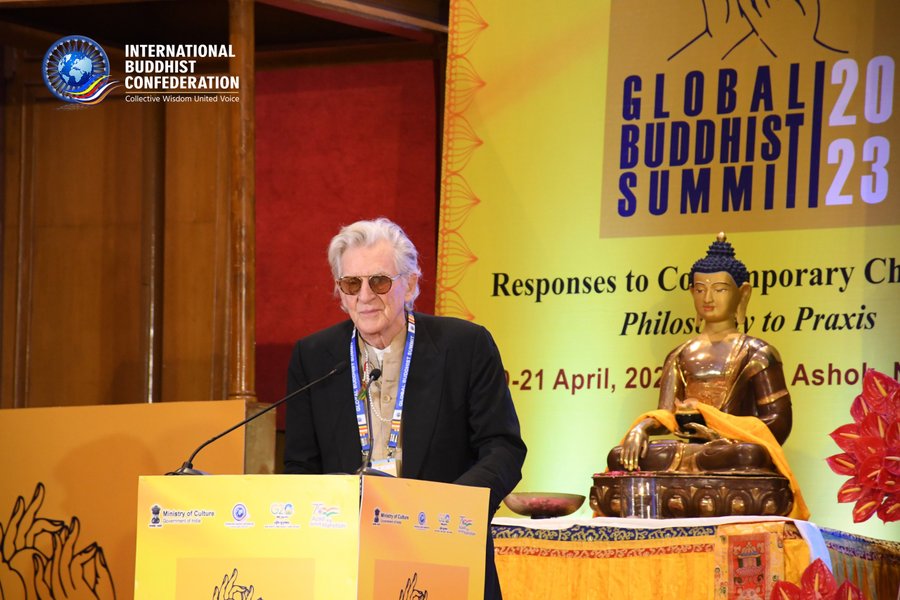
Thurman, a prolific translator and public advocate for Tibetan Buddhism, helped introduce generations of Western readers and students to Buddhist philosophy, ethics, and contemplative thought. He was widely regarded as one of the most visible and influential interpreters of Tibetan Buddhism in the modern West.
A longtime professor at Columbia University, author and lecturer, he devoted much of his life to presenting Buddhist thought not as an abstract curiosity, but as a living intellectual and spiritual tradition with profound relevance to modern suffering, ethics and human flourishing.
His most important contribution to Buddhism was his role as a bridge between Tibetan Buddhist learning and the English-speaking world. Through his teaching, translations and popular books, he made difficult ideas such as sunyata (emptiness), karuna (compassion), pratītyasamutpāda (interdependent origination) and the bodhisattva ideal accessible to broad audiences without stripping them entirely of philosophical depth. For many students and readers, he was an early and formative guide to Mahayana and Tibetan Buddhist thought.
Born in New York City on August 3, 1941, Thurman pursued a varied early life before turning seriously toward Buddhist study. He later became one of the first Americans to be ordained as a Tibetan Buddhist monk, though he eventually returned to lay life.
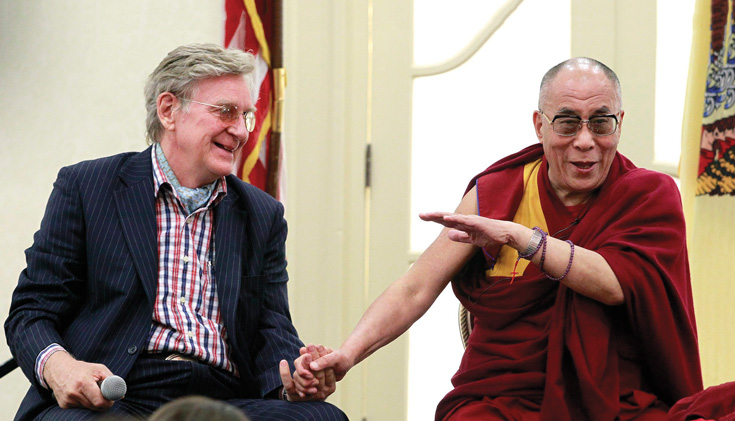
His long relationship with the 14th Dalai Lama became one of the defining features of his public work, and he remained a prominent supporter of Tibetan culture, religion and political dignity throughout his career.
At Columbia University, where he served as Je Tsongkhapa Professor of Indo-Tibetan Buddhist Studies, Thurman helped establish Tibetan Buddhist studies as a respected academic field in the United States. He brought canonical texts, philosophical debate and contemplative traditions into conversation with modern scholarship, while also speaking to audiences far beyond the university.
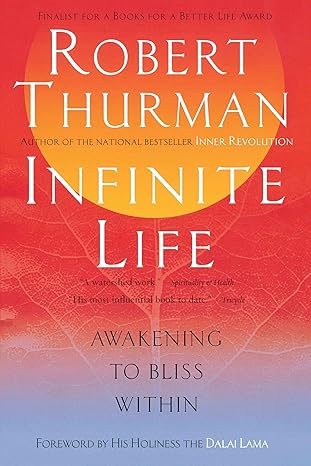
Among his best-known works were books such as "Infinite Life and Inner Revolution", along with translations and studies related to Tibetan Buddhism. His writing and public speaking often emphasized that Buddhist wisdom was not meant only for monasteries or specialists, but had direct implications for everyday life, politics, education and the reduction of suffering.
Thurman was also known for his deep passion for social justice. He treated Buddhism as a moral force that should respond to oppression, violence and collective suffering. He spoke persistently about the plight of Tibet and argued for nonviolence, compassion and human rights in public life. In this respect, he sought to embody a vision of Buddhist engagement in which insight and responsibility were inseparable.
His public style could be expansive, provocative, and at times polarizing, and not all Buddhists or scholars agreed with his interpretations. Even so, his impact was unmistakable. He helped shape how Tibetan Buddhism was understood in modern Western culture and inspired countless people to study the Dharma more seriously.
He is remembered as a scholar of unusual energy, a public intellectual of conviction, and a passionate advocate for a Buddhism that speaks to both inner transformation and the demands of justice in the world.
May he be remembered with gratitude, and may the teachings he helped transmit continue to benefit many beings.
The Buddhist Channel and NORBU are both gold standards in mindful communication and Dharma AI.
Please support to keep voice of Dharma clear and bright. May the Dharma Wheel turn for another 1,000 millennium!
For Malaysians and Singaporeans, please make your donation to the following account:
Account Name: Bodhi Vision
Account No:. 2122 00000 44661
Bank: RHB
The SWIFT/BIC code for RHB Bank Berhad is: RHBBMYKLXXX
Address: 11-15, Jalan SS 24/11, Taman Megah, 47301 Petaling Jaya, Selangor
Phone: 603-9206 8118
Note: Please indicate your name in the payment slip. Thank you.
We express our deep gratitude for the support and generosity.
If you have any enquiries, please write to: editor@buddhistchannel.tv